Best CPU Coolers 2027: Top Air & Liquid Coolers for AMD & Intel
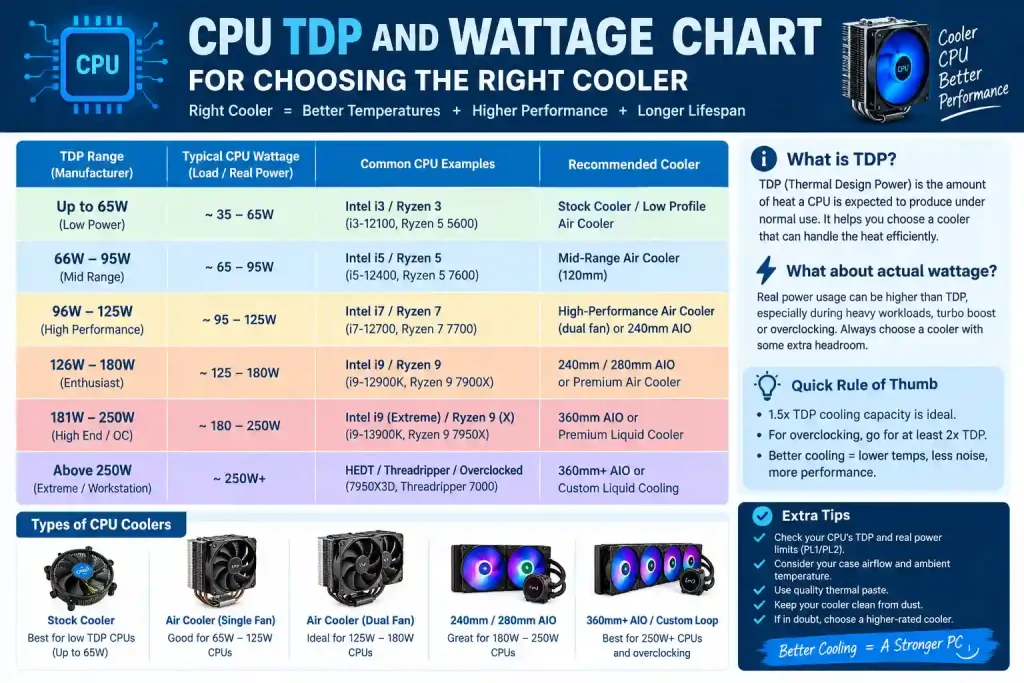
Modern CPUs run hotter than ever. Flagship AMD and Intel chips now regularly push past 250W under full load, which means the cooler you pick in 2027 has a much bigger job than the one you bought three years ago. Pick the wrong one and you’re not just dealing with loud fans you’re dealing with thermal throttling, dropped frame rates, and a CPU that quietly performs below its rated speed no matter how strong your GPU is. For safe idle and gaming limits, see our GPU temperature range guide.
This guide covers the best air and liquid (AIO) CPU coolers for 2027, how to actually choose between them, and because cooling is only half the performance picture how to confirm your CPU and GPU are still balanced once your new cooler is installed.
Not sure if heat is holding your system back? Run a free CPU and GPU bottleneck test before and after your cooler upgrade to see the real difference. → botleneckcalculator.com
How to Choose the Best CPU Cooler in 2027
1. Match the Cooler to Your CPU’s Wattage
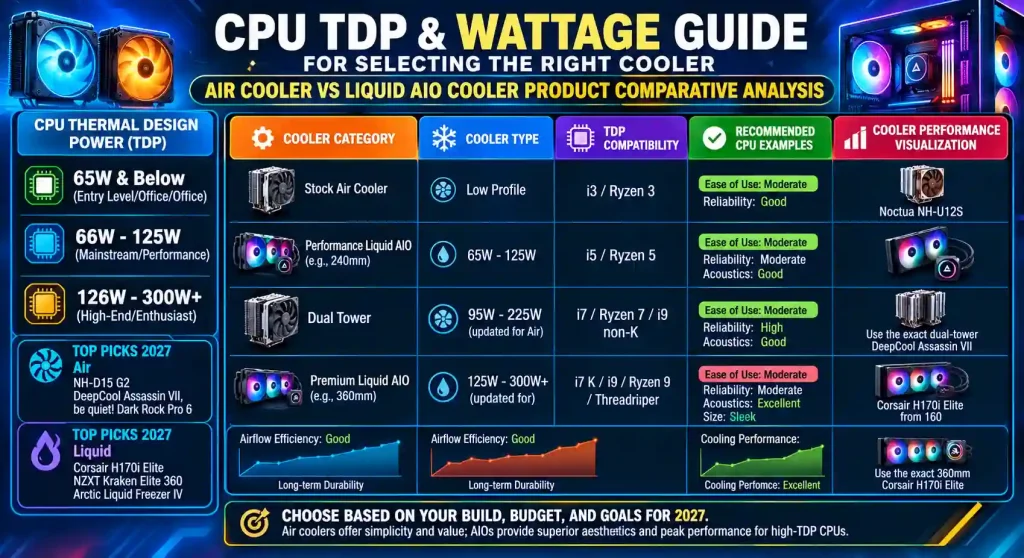
Every cooler is rated for a maximum TDP (thermal design power). Before buying, check your CPU’s real power draw under load, not just its “base” TDP on the box many chips boost well past their rated number. If you’re building a new PC or upgrading a GPU alongside your cooler, running your parts through a wattage calculator for PC builds first will tell you exactly how much headroom you need, both for the cooler and for your power supply.
2. Air Cooling vs Liquid Cooling
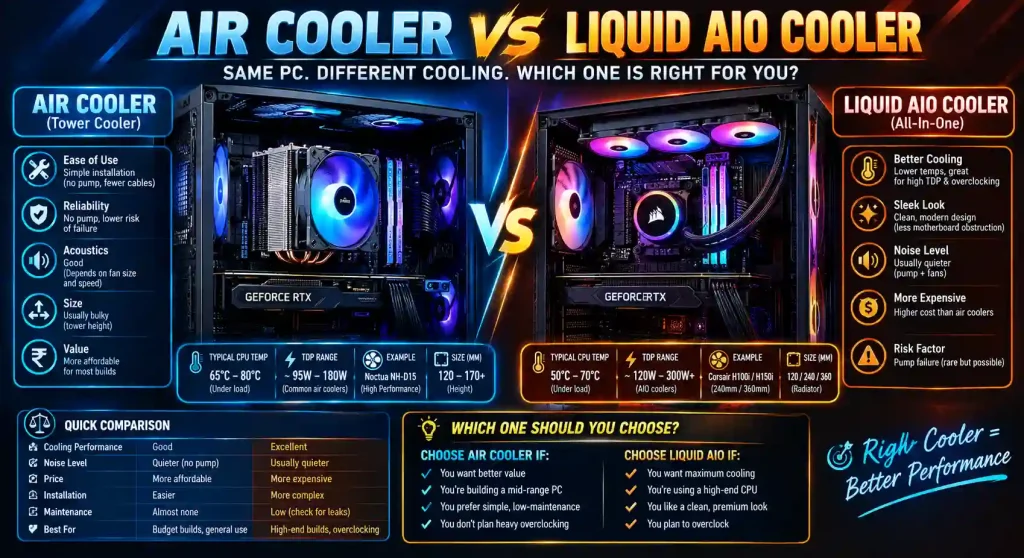
Air coolers use a heatsink and fans; AIO liquid coolers use a pump, radiator, and fans. In 2027, the gap between the two has narrowed a lot the best dual-tower air coolers now match 240mm and even some 280mm AIOs in raw thermal performance, while costing less and having zero pump-failure risk. Liquid cooling still wins on:
- Very high-wattage CPUs (280W+) paired with heavy overclocking
- Small form-factor cases where a tall air tower won’t physically fit
- Builds where a clean look with no large heatsink is a priority
Air cooling still wins on reliability, price-per-degree, and long-term maintenance no pump, no coolant, nothing to replace in five years.
3. Case Clearance and RAM Compatibility
Large dual-tower air coolers can block the top PCIe slot or tall RAM heatsinks. Always check your case’s maximum cooler height and your motherboard’s RAM clearance before buying this is the single most common return reason for air coolers.
Best CPU Coolers 2027 Quick Comparison
$
| Cooler | Type | Best For | Approx. Price | Noise Level | Max TDP Handled |
| Noctua NH-D15 G2 | Air (dual-tower) | High-end builds | $$$$ | Low | 250W+ |
| Arctic Freezer 36 | Air (single-tower) | Budget builds | $ | Moderate | ~180W |
| Cooler Master Hyper 612 Apex | Air (dual-tower) | Looks + performance | $$$ | Moderate-Low | ~220W |
| be quiet! Dark Rock Pro 5 | Air (dual-tower) | Quiet builds | $$$ | Very Low | 230W+ |
| Peerless Assassin 120 SE | Air (dual-tower) | Value performance | $ | Moderate | 200W+ |
| be quiet! Silent Loop 3 420 | AIO (420mm) | Flagship CPUs | Low | 280W+ | |
| Thermalright Wonder Vision 360 UB | AIO (360mm) | Feature-rich builds | $$$ | Moderate | 250W+ |
| Sama L70 | AIO (240–280mm) | Budget liquid cooling | $$ | Moderate | ~200W |
(Pricing shown as relative tiers check current retailer listings for exact figures.)
Best CPU Air Coolers of 2027
Best Overall: Noctua NH-D15 G2
The NH-D15 G2 remains the benchmark for air cooling going into 2027. Its dual-tower design and updated fan pairing let it hold its own against liquid cooling on CPUs pulling 250W and above, while staying noticeably quieter under load than most AIOs at the same performance tier. It’s large and it isn’t cheap, but if you want air-cooling performance with zero pump to worry about, this is the pick.
Best for: High-end AMD Ryzen and Intel Core builds that want liquid-level cooling without a pump.
Best Budget: Arctic Freezer 36
A traditional aluminum-heatsink, copper-heatpipe design that punches well above its price point. It won’t match the flagship coolers on a 250W+ chip, but for mainstream gaming CPUs it keeps temperatures well controlled for a fraction of the cost.
Best for: Budget and mid-range builds where every dollar matters.
Best Looking: Cooler Master Hyper 612 Apex
Built with a tempered glass side panel view in mind, this cooler pairs strong thermal performance with a design that actually looks good behind glass a rare combination in the air-cooling category.
Best Quiet Option: be quiet! Dark Rock Pro 5
True to the brand, this cooler prioritizes low noise without giving up serious thermal headroom, making it a strong pick for people who game or work in a quiet room and don’t want fan noise creeping up under load.
Best Value High-Performer: Peerless Assassin 120 SE
An unusually strong performer on CPUs pulling over 200W, often outperforming pricier competitors at a much lower cost. If you want performance-per-dollar above everything else, this is worth a serious look.
Best Liquid (AIO) Coolers of 2027
Best Premium AIO: be quiet! Silent Loop 3 420
A large 420mm radiator paired with be quiet’s usual focus on acoustics, giving you flagship-level cooling capacity for the hottest 2027 CPUs without the usual AIO whine under load.
Best Feature-Rich AIO: Thermalright Wonder Vision 360 UB ARGB
This 360mm AIO stands out with a 6.7-inch display on the pump block, letting you show live temperatures, custom images, or system stats useful if your case has a clear window facing the room.
Best Budget AIO: Sama L70
A newer name in the cooling space, the L70 delivers solid 240–280mm-class cooling performance at a price that undercuts the established brands, making it a reasonable option for a first liquid-cooled build.
CPU Cooler and Bottleneck: Why Cooling Affects More Than Temperature
How a Weak Cooler Causes a CPU Bottleneck
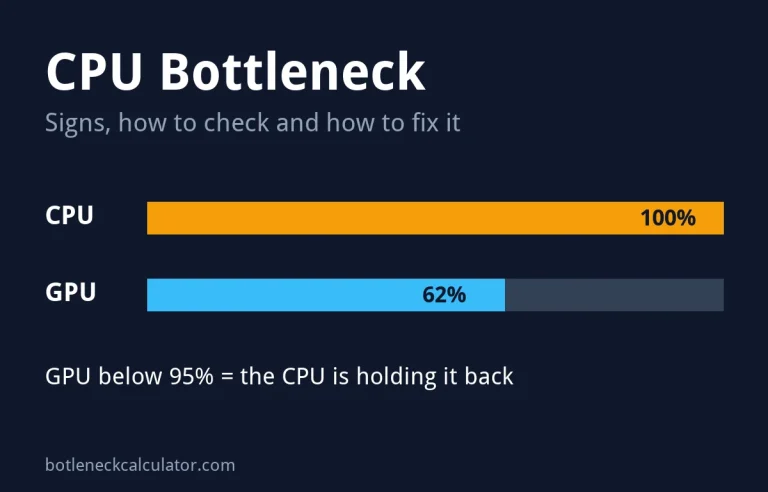
When a CPU overheats, it doesn’t crash it throttles. The processor automatically lowers its clock speed to bring temperatures back down, which means it starts feeding your GPU data more slowly than the GPU can use it. The result looks exactly like a classic CPU bottleneck: lower frame rates, stuttering, and a GPU that sits underutilized even though it’s clearly capable of more. A lot of people chase a GPU upgrade to fix this when the real issue is a cooler that can’t keep up with the CPU under sustained load.
Run a PC Bottleneck Test After Any Hardware Change
Any time you change your cooler, CPU, or GPU, it’s worth re-checking the balance of your build rather than guessing. A quick GPU and CPU bottleneck test compares your specific pairing and flags whether one part is holding the other back including bottlenecks caused by thermal throttling rather than raw hardware mismatch.
Just upgraded your cooler or CPU? Use the free PC Bottleneck Calculator to instantly check your CPU/GPU bottleneck percentage and get clear upgrade recommendations. →botleneckcalculator.com
Do You Need a Bigger Power Supply for a New Cooler?
Air coolers draw almost no extra power, but AIO liquid coolers add a pump plus multiple radiator fans, which can pull an extra 10–25W depending on the model. If you’re already close to your PSU’s limit, it’s worth running your full build CPU, GPU, cooler, storage, and fans through a PC wattage calculator before you install anything, so you’re not stress-testing your power supply the same week you install new hardware.
Frequently Asked Questions
Is a bigger CPU cooler always better?
No. A cooler rated well above your CPU’s actual TDP wastes money and case space. Match the cooler to your CPU’s real power draw under load, not the largest option available.
Can a bad CPU cooler cause a GPU bottleneck?
Indirectly, yes. A CPU that throttles from heat feeds data to the GPU more slowly, which can look identical to a GPU bottleneck test result even though the GPU itself is fine. Fixing the cooling often fixes the “bottleneck.”
Do I need liquid cooling for a 2027 flagship CPU?
Not necessarily. The best dual-tower air coolers now handle 250W+ chips competently. Liquid cooling is more about noise, aesthetics, and headroom for heavy overclocking than a strict requirement.
How do I know if my cooler is the reason for poor performance?
Monitor your CPU temperature and clock speed under load. If clocks drop noticeably as temperatures climb toward the CPU’s thermal limit, that’s throttling. Pairing this with a bottleneck calculator test gives you a clearer picture of whether it’s heat, or a genuine CPU/GPU mismatch.
Does more RGB or a bigger radiator mean better cooling?
No radiator size (240mm vs 360mm vs 420mm) and fan quality matter far more than lighting or branding. Compare thermal benchmarks, not marketing.
Final Verdict
For most 2027 builds, a strong dual-tower air cooler like the Noctua NH-D15 G2 or the budget-friendly Arctic Freezer 36 will handle everything short of extreme overclocking. Step up to a 360mm or 420mm AIO only if you’re running the hottest flagship chips, want a cleaner look inside a windowed case, or are pushing serious overclocks. Whichever you choose, don’t stop at installing it re-run a quick bottleneck and wattage check afterward to confirm your whole system is actually balanced, not just cooler.
Manufacturer specifications: Noctua – NH-D15 G2 specifications; ARCTIC – Freezer 36 specifications; Thermalright – Peerless Assassin 120 SE specifications.